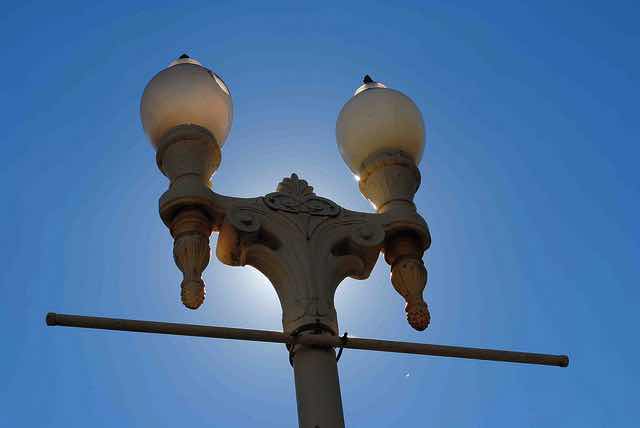
I really like it on those occasions when you “happen” upon a trig. station (have a read). Guess having a surveying background has me looking at these structures in awe. Lately I saw one at Mt Canobolas as below.
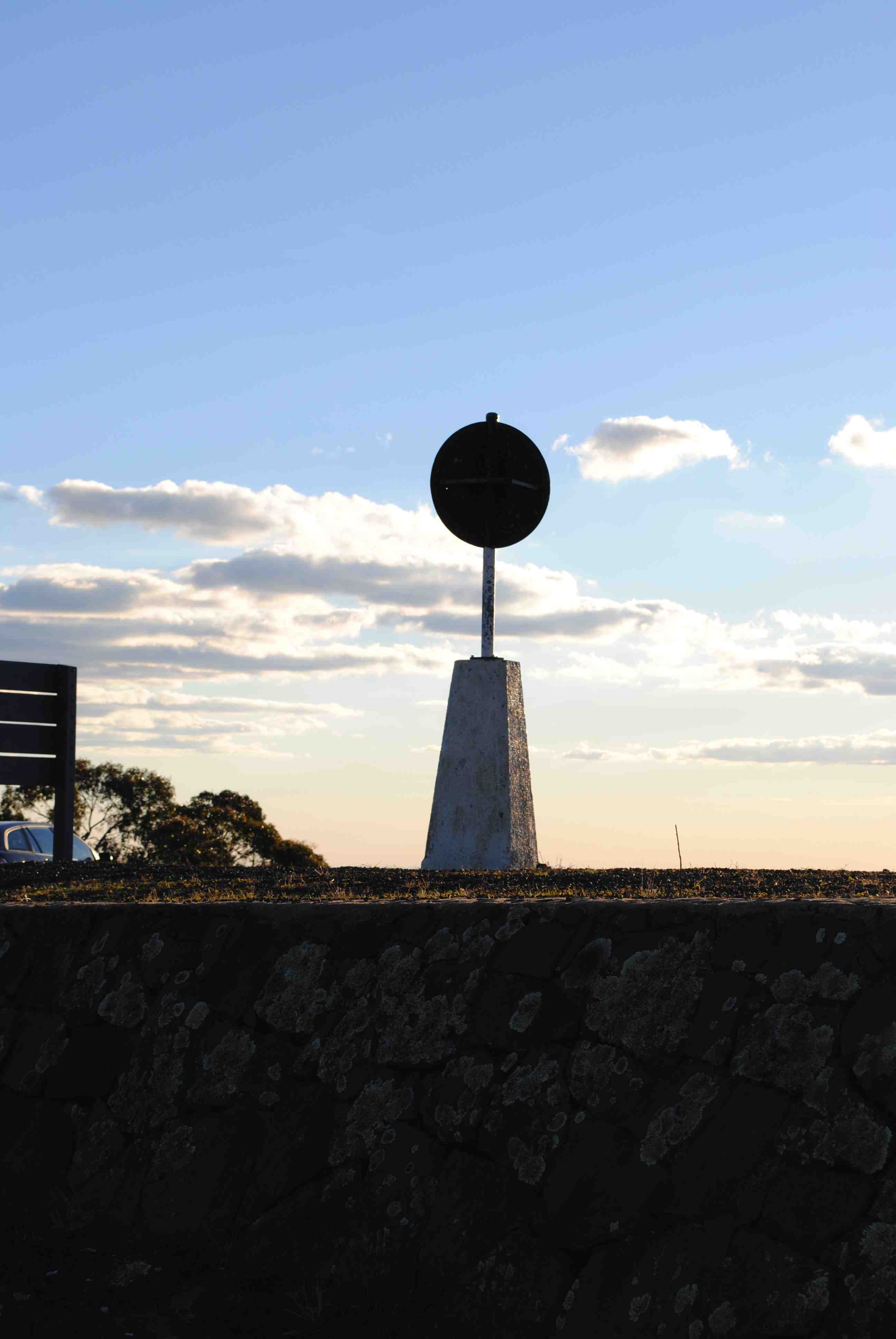
It’s probably also about the fact that they (just about) have to be on the tops of mountains, and so they are pretty dramatic.
Their other fascination is that we know their position on Earth, until you get earthquakes, maybe, thanks to the hard work of surveyors of the past. If you can see three of them and have a theodolite at the ready, you can use those three trig. station geodetic co-ordinates and accurate measurement of the two angles between the three trig. stations, as measured with your theodolite to find out where you are … and what’s better than knowing where you are? When you are? Which you are? How you are? Who you are? Who are you? Oh oh, oh oh.
This method is called resection and the method used in this tutorial is the Cassini method of resection calculation.

ASP.Net Resection Tutorial ... ... Visual Studio Express ... http://www.microsoft.com/visualstudio/eng/products/visual-studio-2010-express ... please use the horizontal scroll to movie-ize
Tutorial using Visual Studio Express …
Have you heard of ASP.Net?
It is a server-side web server language to rival PHP and uses Microsoft technologies and protocols.
Another “word” to Google relating to this product is IIS.
Do yourself a favour and read about it, because, as with all things, there are strengths and weaknesses comparing it to PHP.
One interesting thing I’d research is Mojo Portal as far as CMS (Content Management System) goes.
Download programming source code and rename to Default.aspx.
If this was interesting you may be interested in this too.




Naming the things in a bathroom is a smarter vocabulary exercise than it first looks, because every learner already knows the room, so the words attach to objects they can see and touch instead of floating on a flashcard. Asking how many things can you name turns it into a game rather than a test, and the counting itself becomes the motivation: one more word than last time is a visible win. I like the way this kind of lesson uses a photograph as the prompt, since a picture gives every student the same starting point regardless of level, and the stronger students can move on to describing what each thing is for while beginners are still collecting nouns. The bathroom is a good choice of room too, because it is full of everyday words that textbooks often skip, the small objects people actually say out loud every morning. A daily habit of naming five new things around the house would build a working vocabulary faster than memorising lists, and this post is a good template for it.