
Location Services iPad Camera Geolocation Primer Tutorial
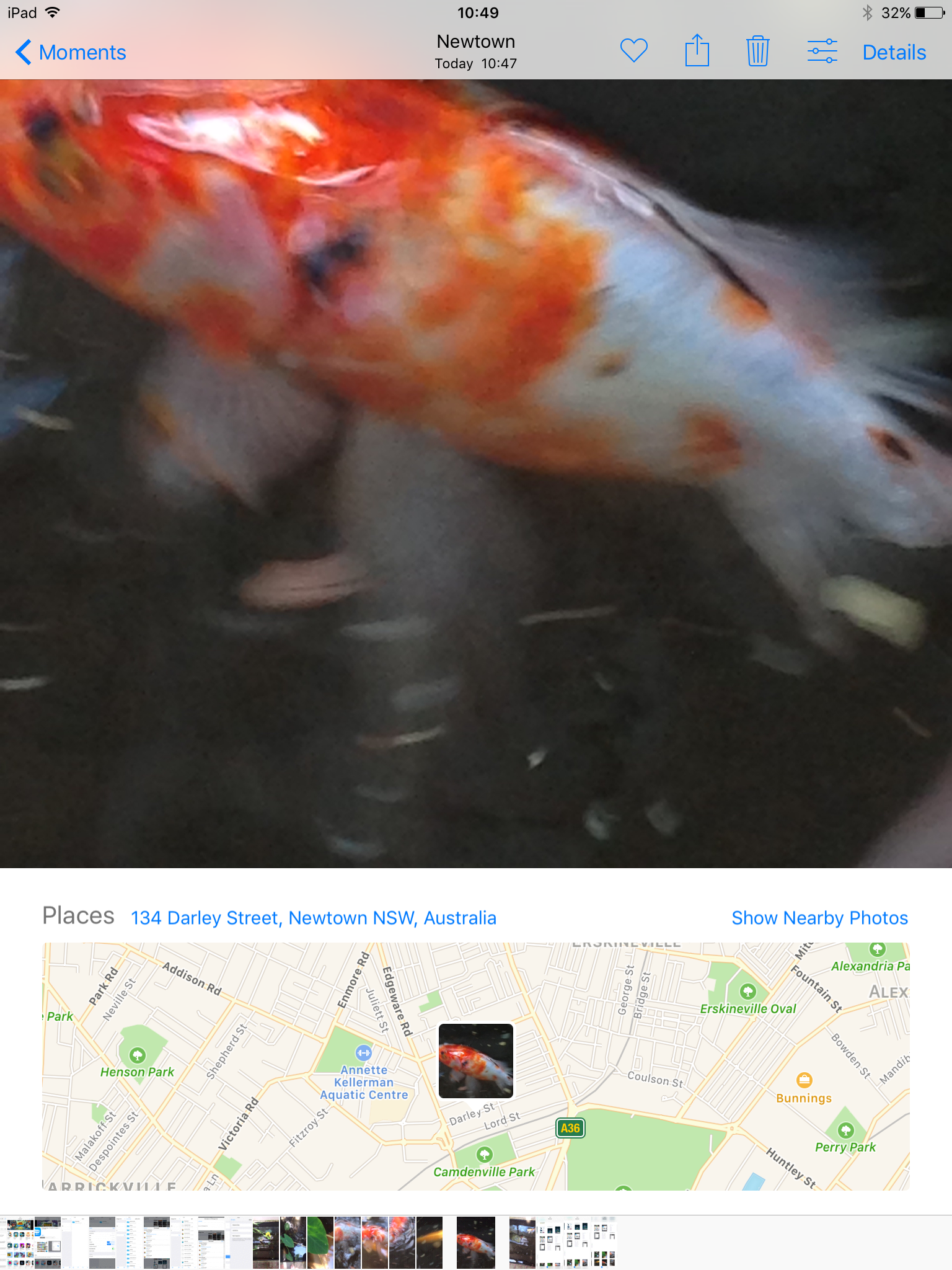
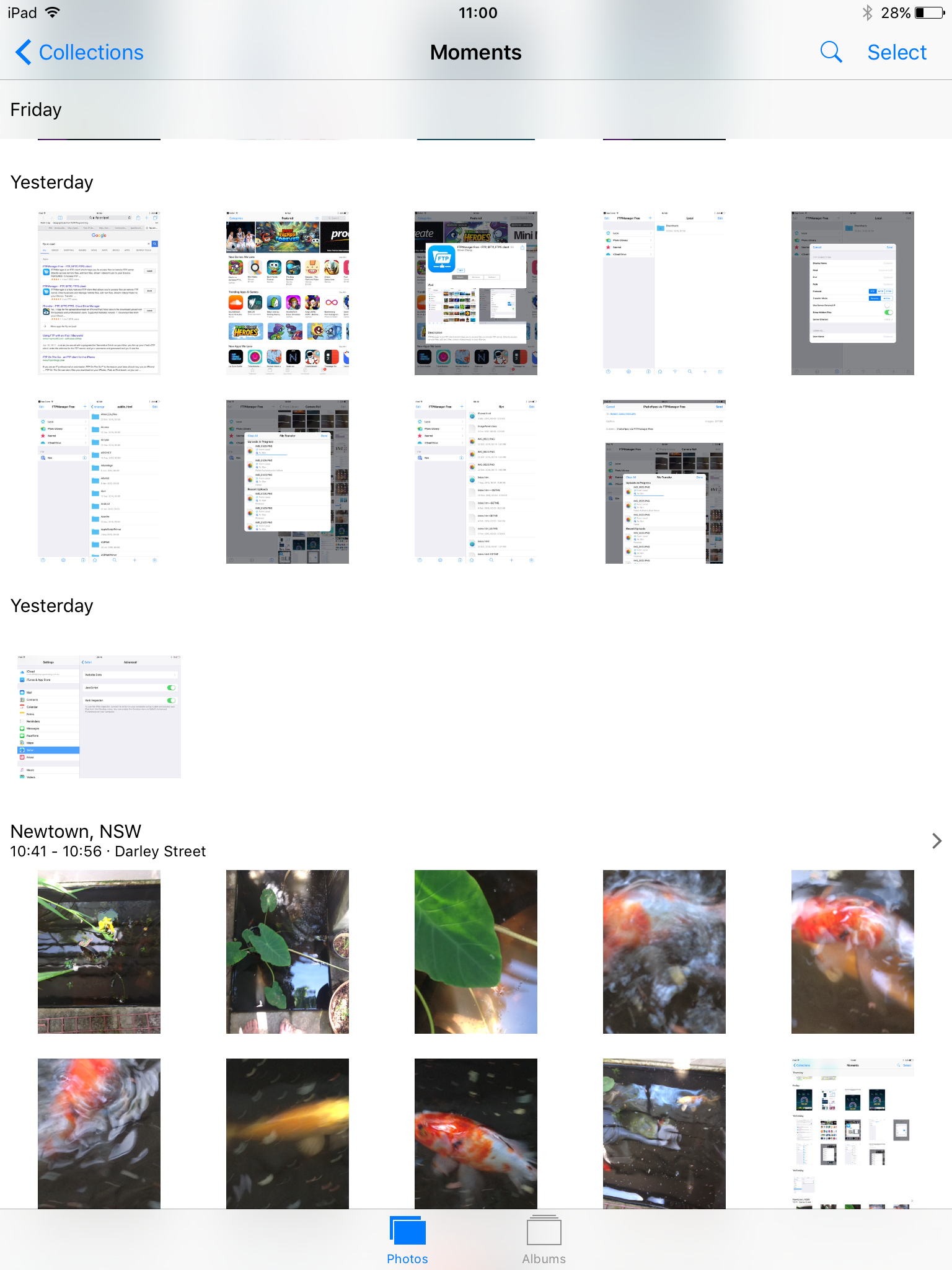
We had occasion to read here about resetting Location Services on an iPad … which, we need to say, you’d only read about and contemplate if something you’ve done has stopped a Geolocation thing you wanted to happen to no longer happen and you’ve ruled out tweaks to Location Service individual app settings with regard to this (and you may have been in on the discussion we had some time back with Location Services iPad Battery Loss Issue Tutorial) … and the result of doing this opened up the iPad’s Camera app for permission for Location Services to record Geolocation data, and it looks like, time, information on the photographs you take. Presumably, this happens in the photograph’s exif data, perhaps (am not promising, might pan out to be metadata) … which interests us as well, and we’ll go into that more soon.
So we used this functionality, as well as zooming in on some fish in our pond for today’s digital photography sojourn. Maybe seeing fish is a source of mindfulness (Wikipedia) …
… for you, as it seems to help for me?
The Geolocation aspects are great, as you can imagine, for helping document a trip, in pictures, even well after the event, if you can get the context of where you are when a photograph is taken.
If this was interesting you may be interested in this too.




Naming the things in a bathroom is a smarter vocabulary exercise than it first looks, because every learner already knows the room, so the words attach to objects they can see and touch instead of floating on a flashcard. Asking how many things can you name turns it into a game rather than a test, and the counting itself becomes the motivation: one more word than last time is a visible win. I like the way this kind of lesson uses a photograph as the prompt, since a picture gives every student the same starting point regardless of level, and the stronger students can move on to describing what each thing is for while beginners are still collecting nouns. The bathroom is a good choice of room too, because it is full of everyday words that textbooks often skip, the small objects people actually say out loud every morning. A daily habit of naming five new things around the house would build a working vocabulary faster than memorising lists, and this post is a good template for it.