
Data Security via Cryptography Primer Tutorial
The subject of data security is becoming a bigger issue for all users of the Internet. People may vary about their feelings regarding the level of personal responsibility they feel towards securing the data they present to the world, whether knowingly, or unknowingly, by engaging with the Internet, or VPNs.
It might be that your interface to the Internet is through a private company’s network, and that a lot of this concern is taken care of to do with company policy, but if you delve to the n’th degree, there are interfaces to the world not just where you work, but with communications such as email.
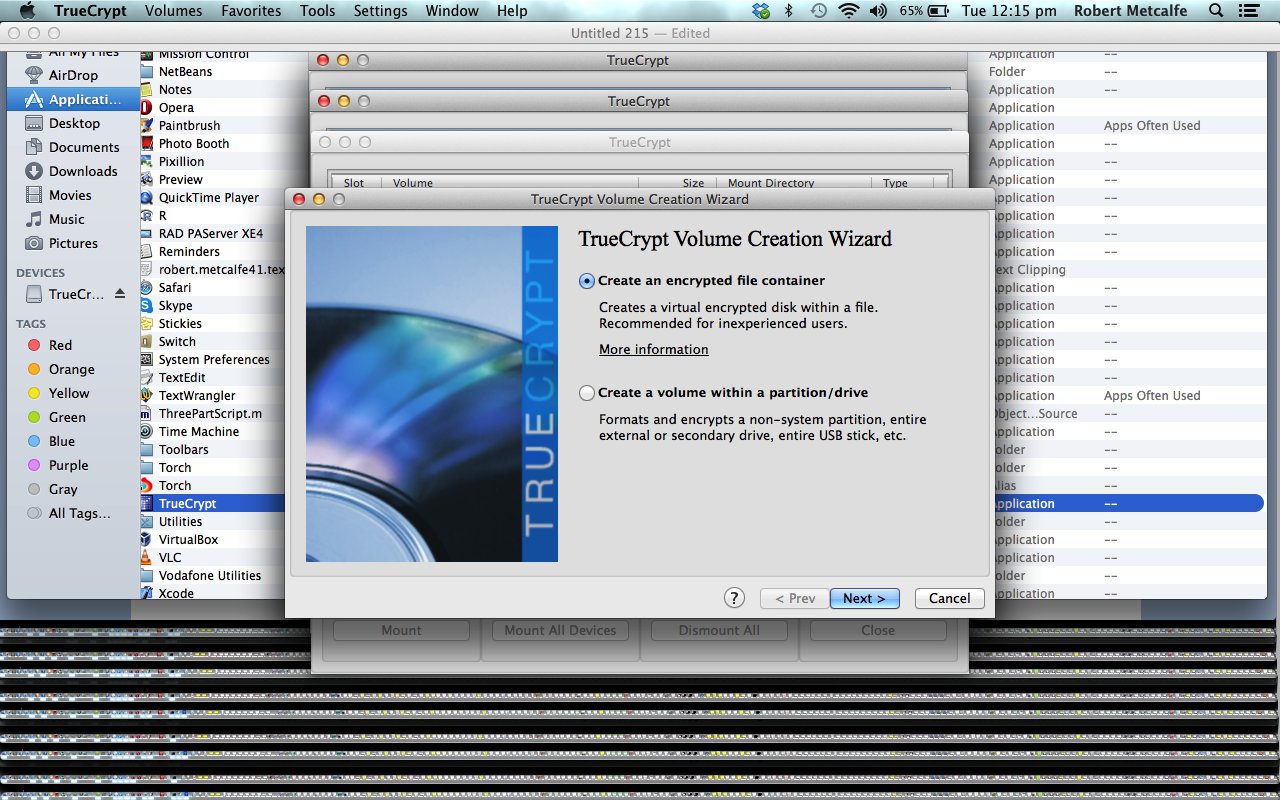
Today we show you some great data security software, called TrueCrypt, designed to be used to be able to encrypt the data files you wish to protect, whether that be via an encrypted individual file (container) or an encrypted volume or USB, for instance, or even “bigger” arrangements, for which expert advice may come into play … am not sure you should call Ghostbusters for this one?!
TrueCrypt is open source software designed for use with Windows or Mac (as for today’s tutorial install and “first try”), at the very least. Just installing it and setting up a small test shows that it can be manageable without that rocket science degree.
Whatever the case the use of data encryption is not a step to enter into, without looking into the issue a bit. As far as email goes, do some research into whether your email client perhaps encrypts for you … read here … but this is a huge topic area with some pretty high level expertise in the Information Technology industry. The other aspect you can be pretty sure about regarding this topic, is that it will be a topic of growing interest, rather than a shrinking petunia violet.
If this was interesting you may be interested in this too.




The distinction between course-driven and immersion-driven learning is useful. A small extension to the australia.htm exercise would be a set of named map markers and a text filter: first update the visible markers on an input event, then add a collected/uncollected toggle, and finally persist only that toggle state in localStorage. That gives beginners a concrete reason to learn arrays, DOM updates and browser storage without needing PHP or MySQL first. It is also worth testing empty searches, a page reload and disabled storage separately; those are different failure cases. Disclosure: we maintain the GTA 6 interactive map. I am suggesting it as an example of a map-and-progress interface, not claiming that we used the tutorial code. Would you introduce persistence after the first working interaction, or keep the initial exercise entirely stateless?